Indeed Premium Sponsored Jobs
I shipped Indeed's first SMB advertising bundle in 72 days, shifting Indeed's revenue model from clicks to hiring outcomes.
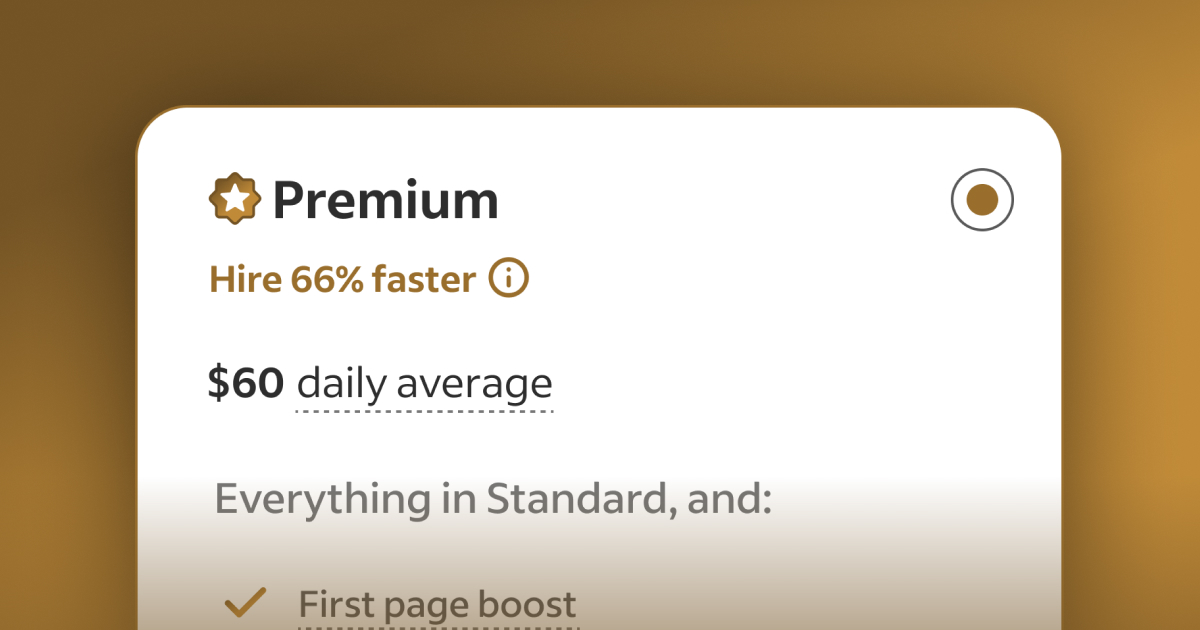
Background: Getting ahead of change
Indeed built its business on Sponsored Jobs, an advertising product that monetized traffic to job ads. Revenue correlated to the volume of job posting, which was good business until we saw structural dropoff.
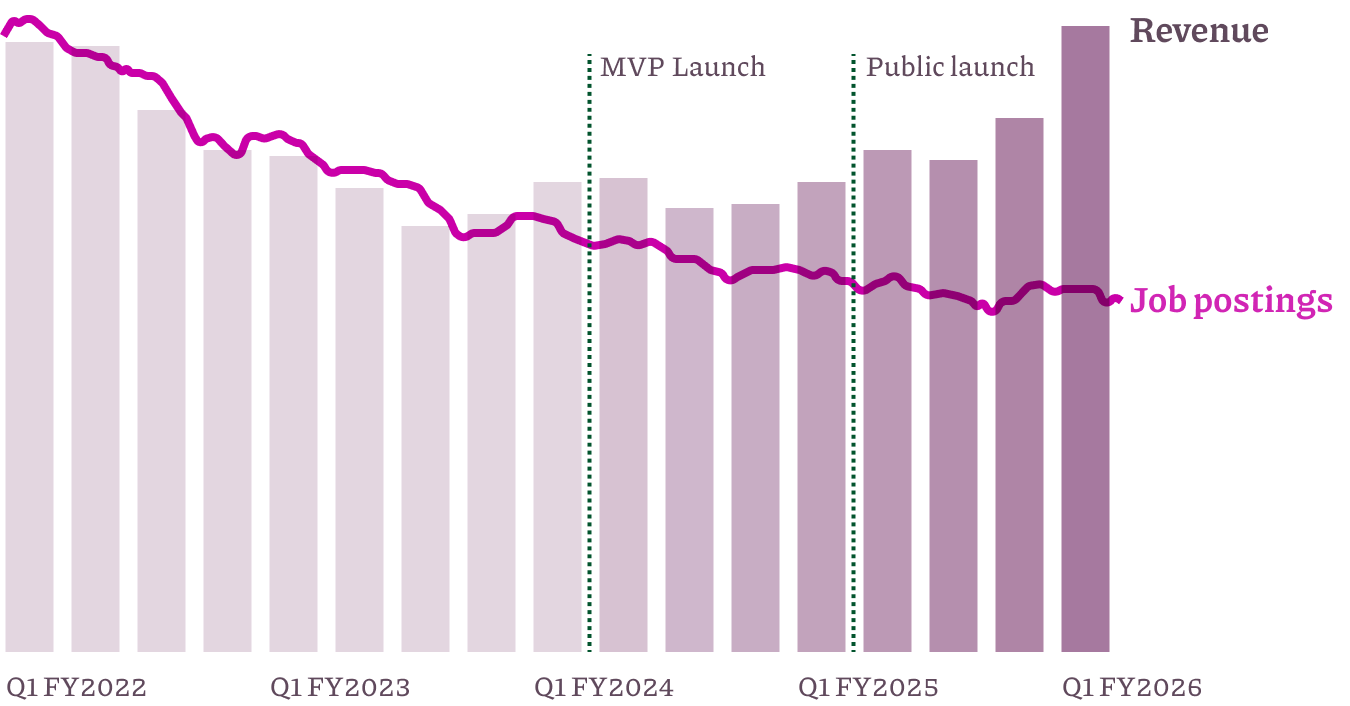
Leadership urgently restructured and refocused teams around this new threat to growth.
The strategy:
- Uncouple revenue from job volume by increasing dollars per job post, but …
- Maintain our pay for performance values, which means …
- Capture more value (not just raise prices) by shifting delivery from clicks to hiring outcomes.
I joined the Monetization team to lead design on this new problem.
Assignment: New product for new revenue
The CEO gave us the shape of this new product in two points:
- Bundle Indeed's best hiring tools into Sponsored Jobs.
- Tier Sponsored Jobs into a binary selection: Standard, the classic product, and Premium, the new bundle.
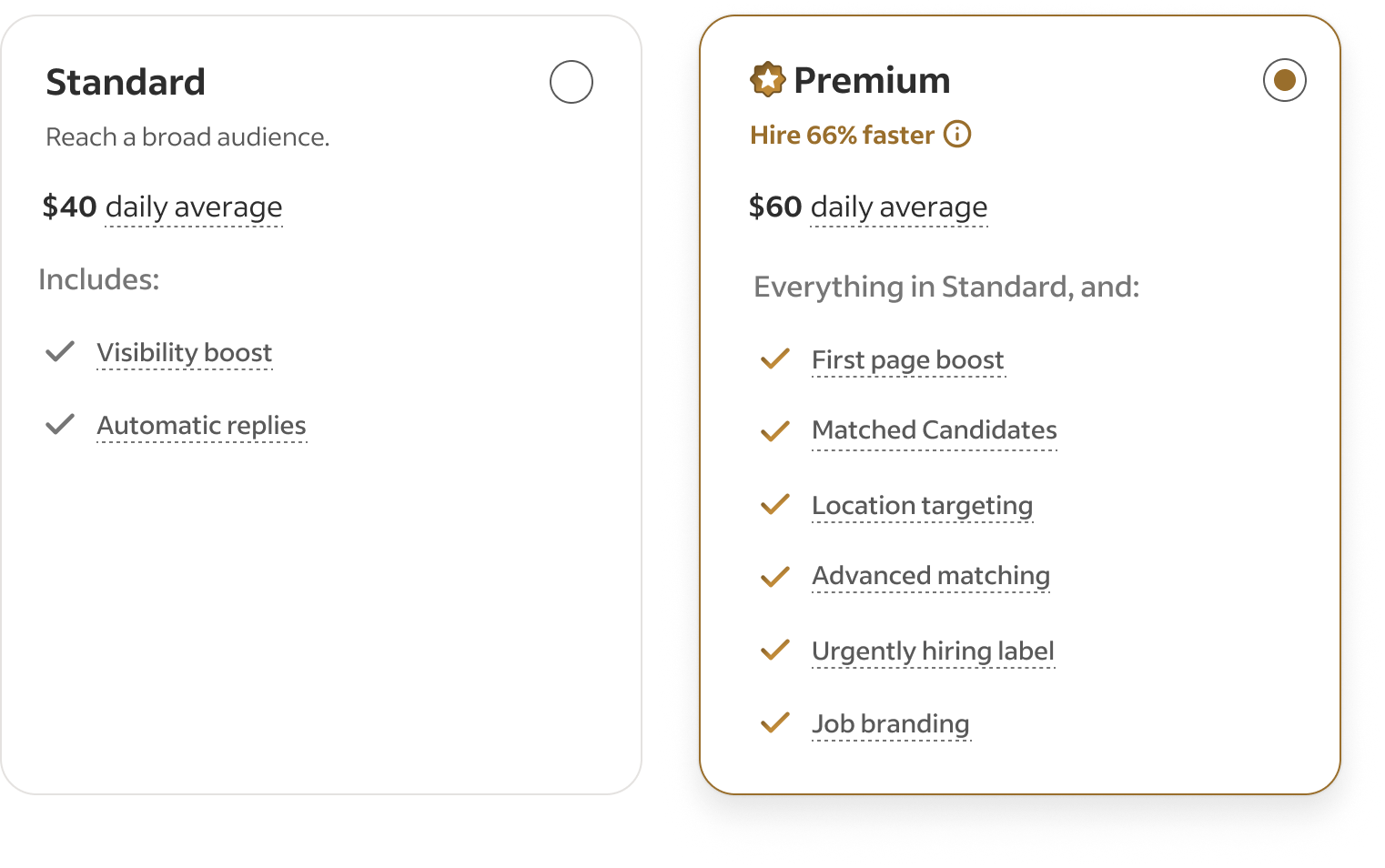
(Though we expected three tiers might be more productive, we didn't have the breadth of features to ship that yet.)
My job was to design a coherent end-to-end experience for Premium:
- Packaging: Communicate features and benefits of the new bundle.
- Activation: Convert buyers and drive adoption to features.
- Delivery: Make sure users receive and understand value from the features.
"You de-risked a huge swing by communicating concepts and assumptions with a large set of cross-team partners early and often, at an aggressive weekly pace of research and iteration that kept SLT informed through multiple pivots." — Monetization Product Director
Challenge: Align eight teams in one experience
Product leadership gave us the features that would compose the new Premium bundle. I unified them into one flow, synthesizing the product experience in partnership with the following teams:
- Monetization (my home team): Drive adoption of the new top tier product.
- Marketplace efficiency: Communicate new ad targeting and visibility features.
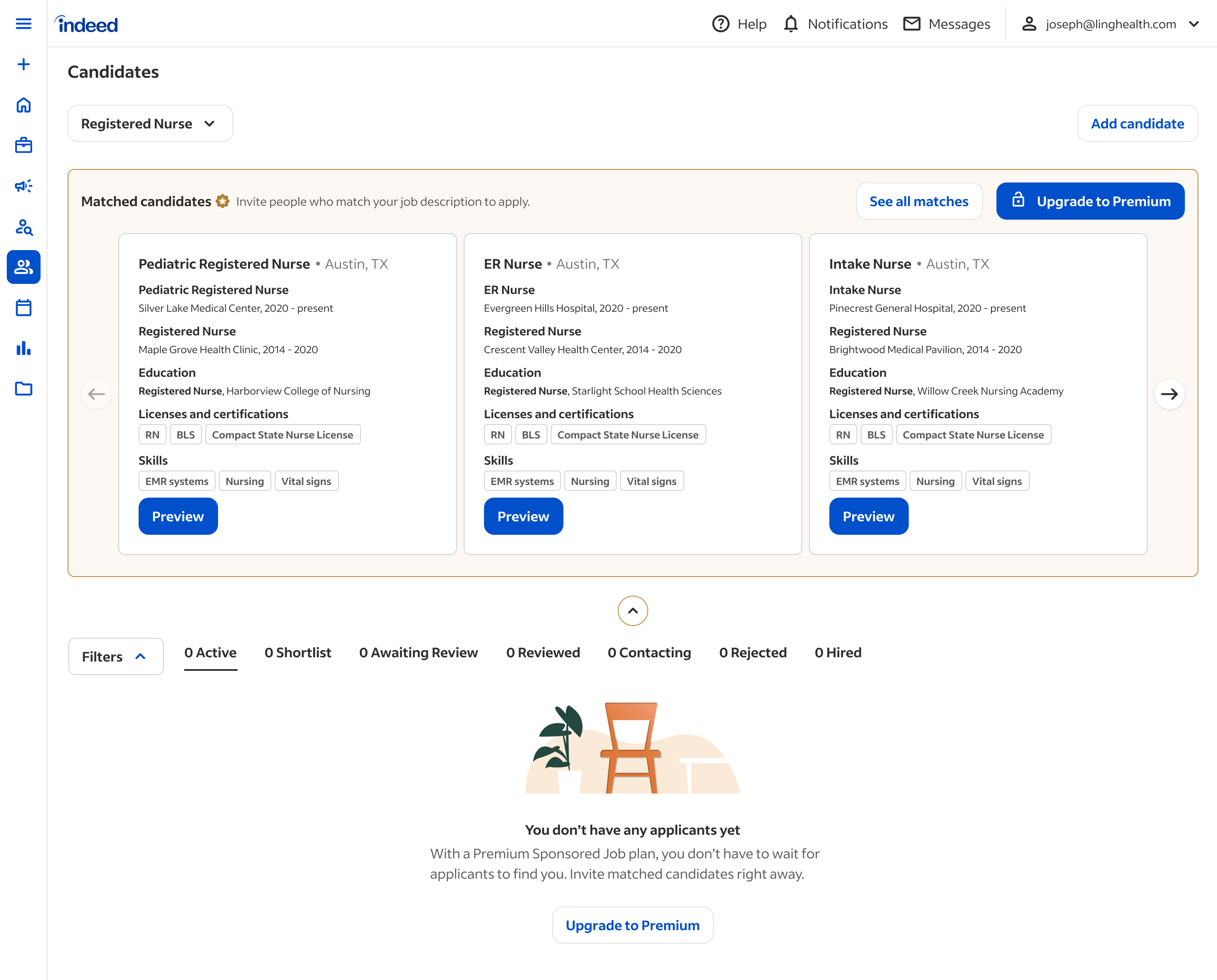
- Sourcing: Introduce Matched Candidates, our resume database, to small business customers.
- Job management: Make it easy to observe Premium job performance and take action.
- Candidate management: Make it easy to identify applications won through Premium features, then drive engagement with those job seekers.
- Brand: Visually differentiate Premium moments across the platform.
- Legal: Gain customers' consent and understanding for changing marketplace mechanics.
- Job search: Allow employers to present company branding on their Premium job listing.
Method: Derisk, ship, learn
Leadership asked us to ship whole experiences and learn in production rather than run sequenced A/B tests, which was our usual mode. I worked in three phases:
- Shake out assumptions
- Ship our best hypothesis MVP
- Experiment and improve
1. Shake out assumptions
During week one, I hosted jam sessions for all functions, orgs, and levels to share expectations in familiar docs, not sticky notes. Within days I synthesized those requirements into a Figma flow to provoke reactions and accelerate product decisions.

For example, our raw early prototype surfaced that we were handwaving past novel ad settings the CEO and legal wanted to make explicit to buyers. We caught that early before committing engineering resources. Research also used those prototypes to start testing hypotheses early.
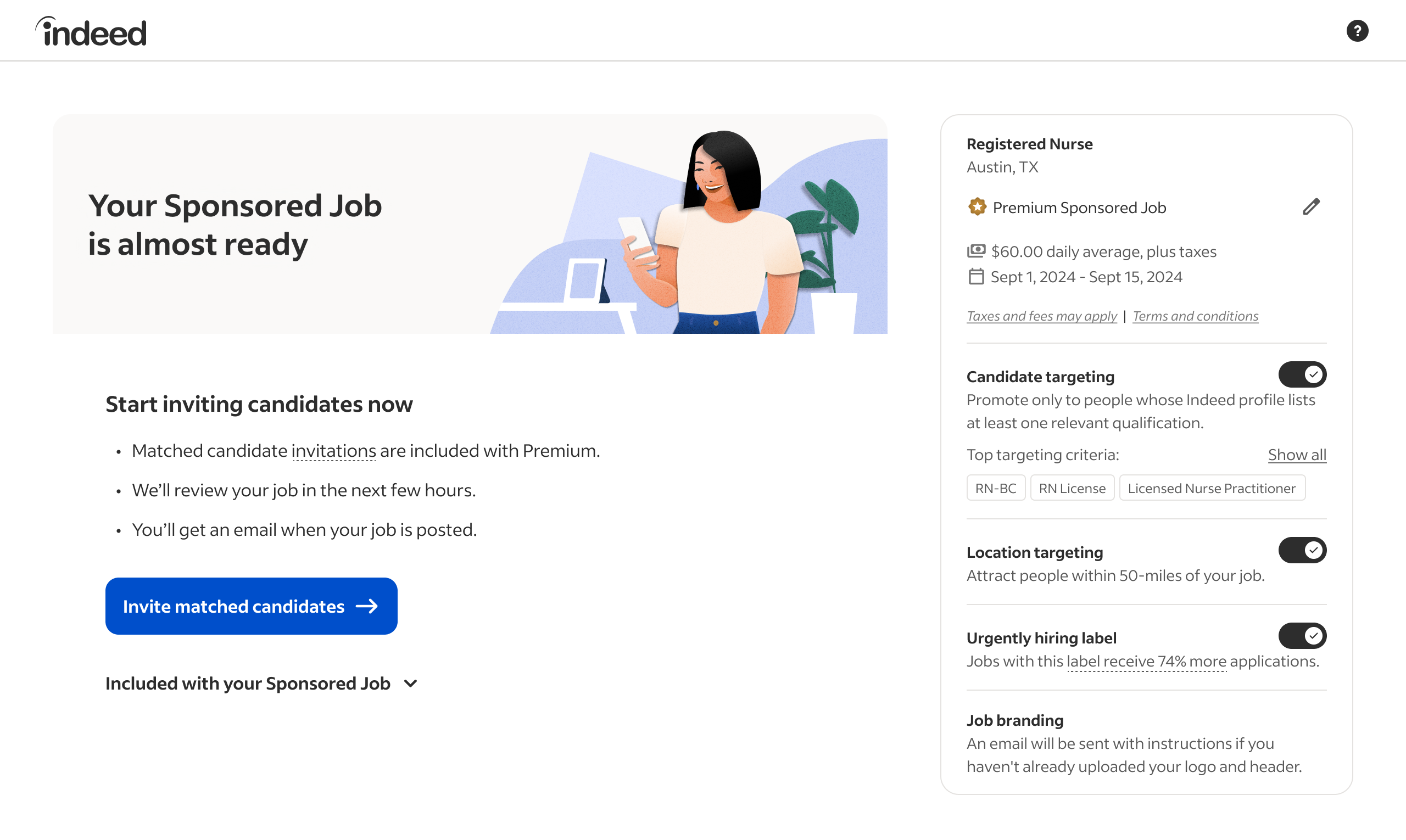
I maintained a narrative UX slide deck with daily product updates, receiving 435 total unique viewers and 272 comments.
2. Ship our best hypothesis MVP
Through cycles of surveys, prototyping, and user testing, we shipped the MVP in 72 days. In that time I tackled two core design problems:
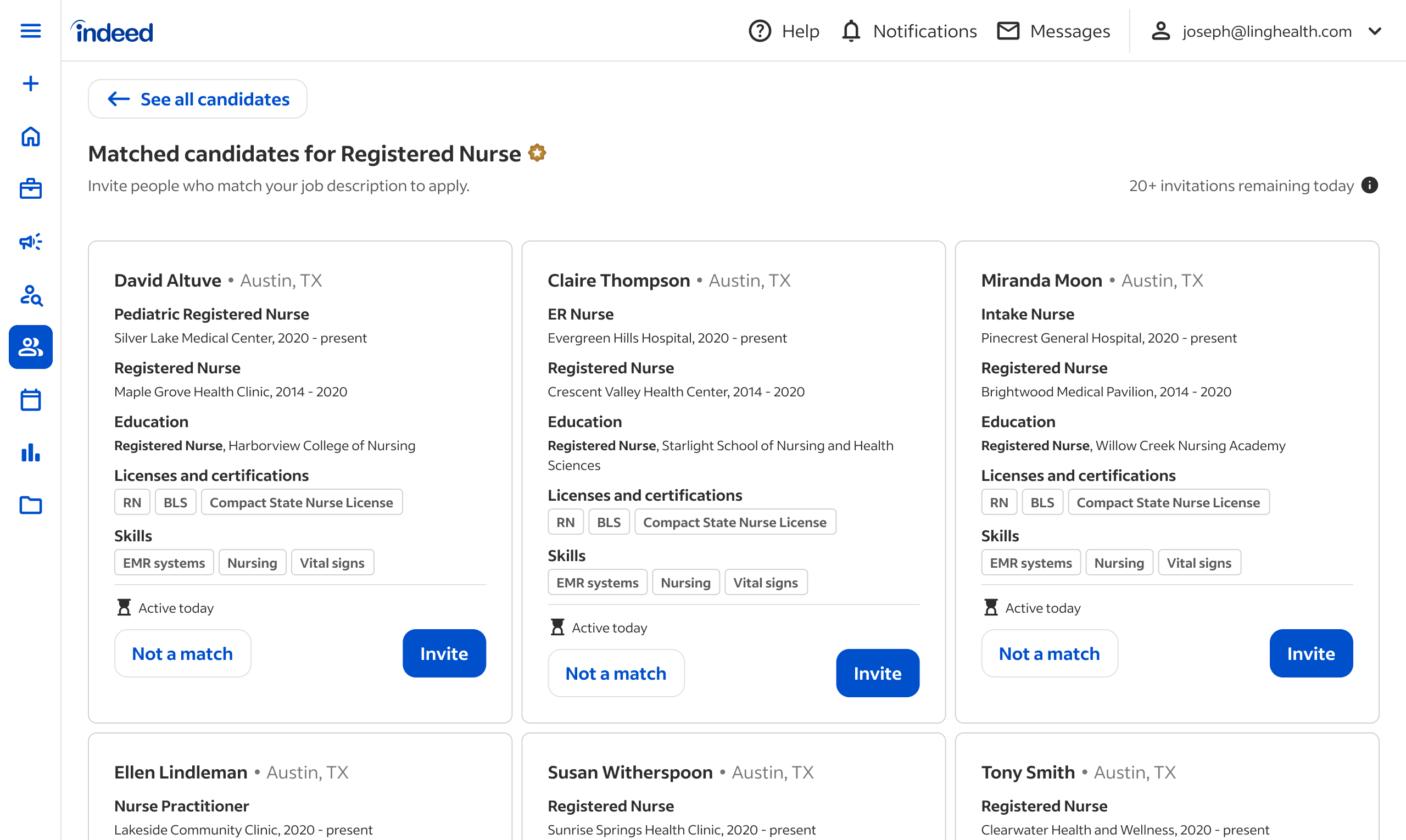
- Build and refine a streamlined path for employers to invite Matched Candidates to apply, a productive behavior that's unfamiliar to most small business customers. Matched Candidates had fizzled as a small business product years earlier, but continued inside our enterprise sourcing tool. I worked with our Sourcing team to bring back a simplified version.
- Structure visual patterns to differentiate Premium along the journey from purchase to job close. Premium is a big daily investment for small businesses, so all Premium concepts, jobs, and candidates needed to be legible across the platform. I provided the mechanical template our visual design team used to craft a new sub-brand owned by Premium.
3. Experiment and improve
In the months after MVP launched, we ran 40+ experiments ranging from invisible back-end refinements to major new screens. We tracked a list of success metrics to guide our decisions:
- Revenue per job
- Positive outcomes (POs) per job. These are a basket of successful marketplace events.
- Clicks to POs
- Cost per PO
- Days to hire
- Quality applies
- Likelihood to apply
- Activation funnel from purchase to first candidate invitation
In that experimentation period, I shipped two critical improvements.
Upsell path: I deconstructed the existing multiple-choice upsell approach and re-made it to funnel all small business activity towards adopting Premium. I identified productive Premium upsell moments when strong candidates or next steps ran short. Then I mapped all those moments into logical journeys for engineering to build.
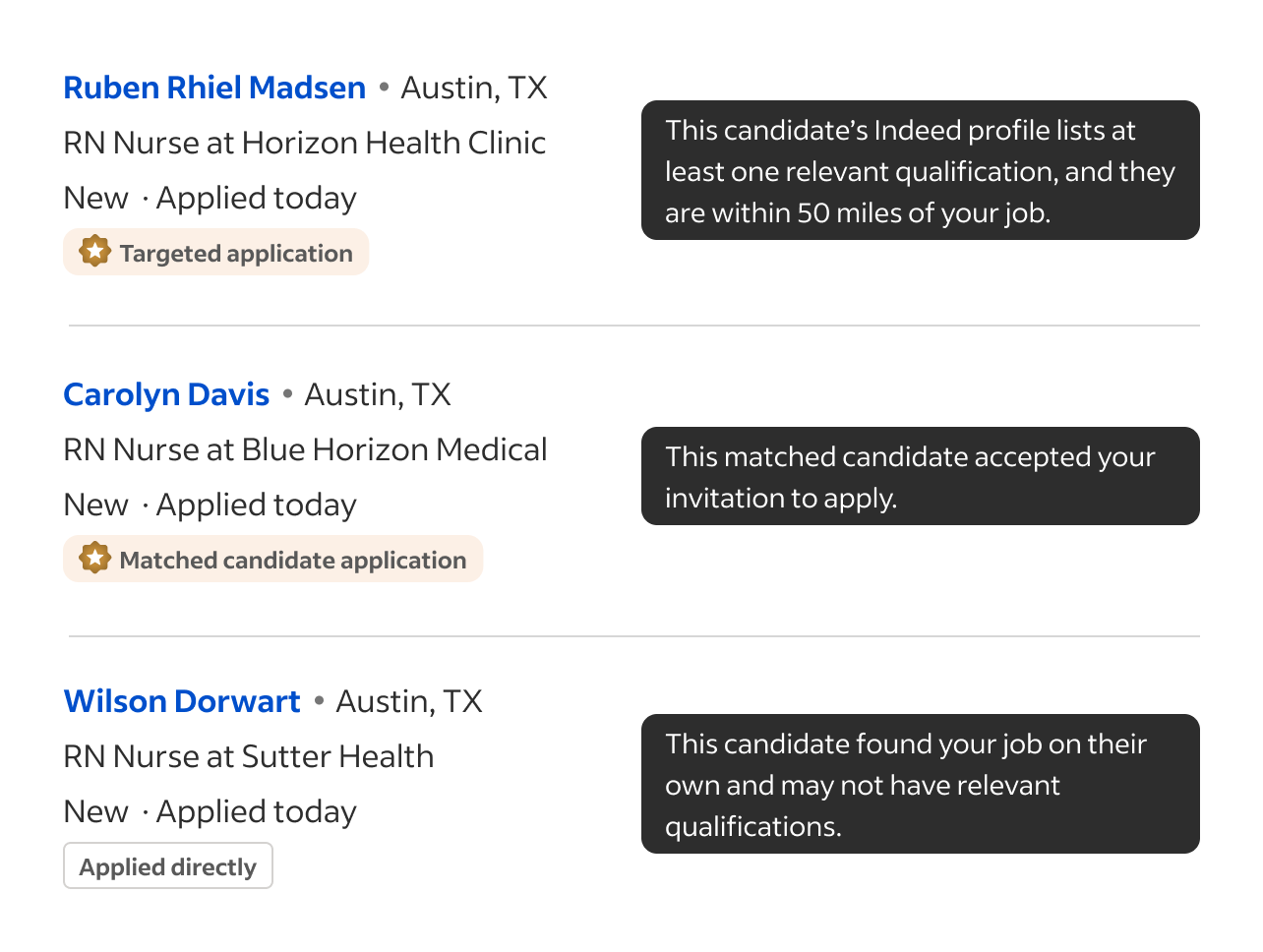
Candidate labeling: While content and research were under water, I ran my own study to discover the right language and visual approach to distinguish Premium matched and targeted candidates from direct applications.
Epilogue and impact
Premium ramped up over months to become the global standard advertising product, rolling out to Great Britain, Canada, France, and Japan. It went on to be cited in earnings calls as a primary driver of US revenue growth during a stretch of declining job postings.
+17%
Revenue per job
20%
Customers returning more often
4x
Quality applications
8 days
Faster to hire
"Premium sponsored jobs — it's probably the best product since I've been in the company, really, really do. Now that we have that, I think it's going to be much easier to position sponsored jobs and be able to sell it. Even visually, when you're doing a demonstration and a client sees the Premium Sponsored Jobs, it looks really, really well." — Sales leader
Unresolved: The role of new value and new packaging
We generated durable lift shipping a wholesale revamp with new features, positioning, and product assortment. But doing all this at once makes it unclear in my mind what lessons to take from the win. Top of mind for me is how much we gained with new choice architecture. The old product asked whether to sponsor and the new one asked how much. But there was no holdout test where we would offer that new tier without new value.
While employers bought Premium for visibility, research told us Matched Candidates was a top value feature. It was an aspirational benefit that gave us credibility to offer a Premium tier, and employers the permission to invest more in closing their job faster. Buy for the clicks, feel good about the extra features.